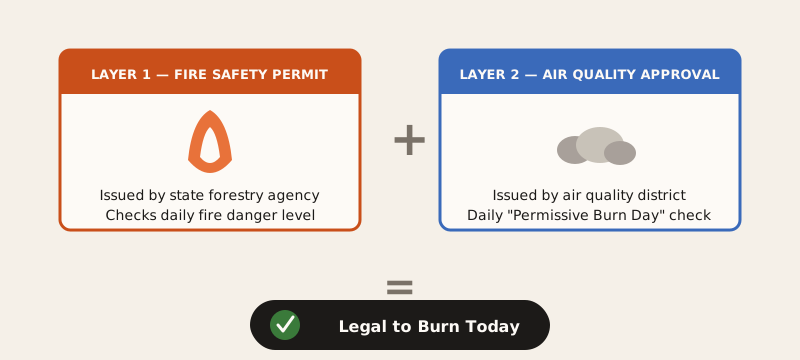
Layer 1: The Fire Safety Permit
The fire safety permit is issued by your state forestry commission or equivalent agency. Its purpose is fire prevention and suppression coordination — it ensures that when you burn, someone in the fire management system knows about it, conditions are safe, and rangers can respond quickly if needed.
In most states, this permit is:
- Free — no charge in any state
- Issued online or by phone in minutes
- Valid for one day (in most states)
- Automatically denied when fire danger is Very High or Extreme
States where Layer 1 applies to every single outdoor burn: Georgia, Florida, South Carolina, Mississippi, Louisiana.
States where Layer 1 applies seasonally: Virginia (Feb 15–Apr 30), Tennessee (Feb 15–Apr 30), Kentucky (Feb 15–Apr 30), Michigan (Apr 1–May 31), North Carolina (protected areas year-round).
Layer 2: Air Quality Approval
The air quality layer is managed by Air Quality Management Districts (AQMDs) or Air Pollution Control Districts (APCDs). Its purpose is protecting public health from smoke — burning is only allowed on days when the atmosphere can disperse smoke without creating unhealthy air quality.
In states with formal burn-day systems, even a valid Layer 1 permit doesn't authorize burning on a No Burn Day. Both layers must simultaneously be satisfied.
States with formal Layer 2 air district systems: California, Oregon, Washington. Other states have informal air quality guidance but not formal daily burn-day designation systems.
The Three-Step Process for Any State
- Check whether a permit is required in your state and county. Use our State Permit Checker — select your state for the exact requirement, agency, and portal link.
- Get your permit. Free, online or phone, takes under 10 minutes. Your permit number is your legal authorization for that day.
- Check burn day status if your state uses air district designations. California, Oregon, and Washington require this second step. In other states, fire danger level (checked automatically by the permit system) is the primary gate.
What the Permit Does NOT Cover
A burn permit authorizes you to burn — it doesn't override:
- Local municipal ordinances — cities and towns can prohibit open burning even where state law permits it
- HOA CC&Rs — your homeowners association's rules are a private contract the permit doesn't affect
- Material restrictions — no permit authorizes burning garbage, treated wood, tires, or plastics
- Safety requirements — permits require you to follow safe burning rules: wind limits, water supply, attended fire
- County burn bans — in Texas and similar states, county-level bans supersede any state permit
Frequently Asked Questions
Not in every state year-round, but in most states under most conditions, yes. A handful of states leave burning regulation entirely to local jurisdictions. Most require either a year-round permit (GA, FL, SC) or a seasonal permit during high-risk periods (VA, TN, MI). Use the State Permit Checker for your specific state.
In most states, no — permits are issued per-day and are valid only on the day of issue. Georgia's GFC system and Florida's FFS system both issue daily permits. If you plan to burn over multiple days, you need to get a new permit each day. The advantage: the daily check ensures you always have current fire danger information before burning.
Ignorance of the permit requirement is not a legal defense, but it's often a mitigating factor judges consider for first-time violations. If you've already burned without authorization and nothing went wrong, the best course is to ensure you get permits for all future burns. If you received a citation, respond promptly — many agencies offer reduced penalties for first-time violations combined with compliance agreements.